

Andy MACMILLAN is Manager, Unconventional Reservoirs for ConocoPhillips, accountable for developing and leading technical experts across the company in supporting our North American unconventional assets. MacMillan has 18 years with the company starting in 2005 as a reservoir engineer in Aberdeen, UK. He worked in a variety of engineering roles in Aberdeen and Norway, supporting exploration and development assets in the Central and Southern North Sea. In 2011, he transferred to Houston, Texas, as Staff Engineer responsible for the development and support of our internal simulation software suite. He developed and implemented uncertainty quantification software and state-of-the-art modeling workflows during the early unconventional reservoir expansion. In 2018, he moved to his current role which oversees subsurface expertise in unconventional development workflows, tools, and standards. MacMillan earned a Master of Engineering degree in Chemical Engineering from Newcastle University, UK in 2004 and a Master of Science in Petroleum Engineering from Heriot-Watt University, UK in 2005.
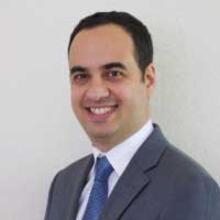
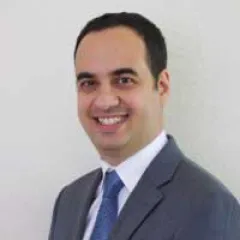
Dr. MARZBAN has been involved in design and analysis of aviation and oil and gas products for more than fifteen years. His multidisciplinary background includes 3D linear/non-linear Finite Element (FE) and Computational Fluid Dynamics (CFD) analysis and design of major subsea products including XMass trees, Subsea Umbilical Termination Assembly (SUTA) boxes, Subsea Electronic Module (SEM), Subsea Control Module (SCM), subsea mudmat, Blowout Preventer (BOP), pumps, pipelines, pressure vessels, valves, jumpers and risers using DNV, NORSOK, API and ASME codes. He was also involved in structural/thermal, digital twin and drop object analysis, fatigue and failure life calculations of various aviation components. He also has extensive experience in digital twin concept, condition based monitoring, data analytics and machine learning.
Abstract:
As the world expands its energy portfolio to lower-carbon sources, NOV is at the forefront of this energy evolution, continuously growing and diversifying our core engineering, manufacturing, and project management expertise to offer new and exciting opportunities. Staying true to our roots while continuing to evolve, NOV helps our customers produce energy no matter the source.
The energy industry relies on our expertise and technology to continually improve operations and advance the energy transition toward a more sustainable future. We are all stakeholders in the progress of our industry, and it will take combined efforts across numerous energy sources to drive the innovation required to meet the world’s ever-evolving energy needs.
In this session, we will review the power of simulation in advancing the following energy transitions initiatives:
- -Offshore Wind
- -Geothermal Solutions
- -Carbon Capture Utilization and Storage
- -Solar Energy


Sandeep KUMAR is a senior solution consultant with Dassault Systèmes (DS) in the Energy & Materials Group. In this role, Sandeep helps DS clients in exploring, finding, and building simulation-based solutions to complex engineering problems. His areas of expertise include subsurface geomechanics, structural analysis, and mechanics of metals & materials. Prior to joining Dassault, Sandeep served as a senior subsurface engineer at ExxonMobil Upstream Research Company for 5 years. He holds a master's and a Ph.D. in mechanical engineering – both earned from MIT.
Abstract:
Offshore and Onshore Geomechanics
This session will include:
- Drilling – Thermo-Hydro-Mechanical (THM) methods for modeling A) wellbore stability, to better understand controllable factors such as wellbore fluid pressure & mud chemical composition, B) Circulation losses, to reduce formation damage & risk of blowout and C) mud-weight window for onshore & offshore drilling, narrow margin drilling (NMDs), and extended reach drills (ERDs) to mitigate risk of wellbore breakout.
- Completion – Enhanced modeling techniques for assessing cement sheath integrity, modeling hydration stresses in the cementing and casing, and analyzing the cement/casing and cement/formation interfaces, to prevent casing and well-bore damage, minimize environmental impacts and avoid potential remediation costs.
- Stimulation & Production – Methods and models for modeling hydraulic fracturing (for applications including Fracking/CRI/PWRI), inter- and intra-stage stress-shadowing, stress reorientation due to reservoir depletion, well-well interference, and proppant transport and fracture conductivity. This allows for, among other benefits, better understanding of the final distribution of proppant in the stimulated fracture network, and improving overall fracking effectiveness.
- Abandonment – Techniques for modeling stresses in cement plugs and assessing their integrity for preventing inter-zonal fluid migration, and achieving long-term zonal isolation.
New Energy - The Advent of Geothermal Systems session
This session will include:
- Methods for evaluating different completion types and designs in geothermal systems while accounting for reservoir geology, pore-pressure, and in-situ stresses.
- Estimating energy recovery for geothermal systems for different designs, injection rates, and circulating fluids.
- Examining well interference (in multi-loop designs) and develop guidelines for well spacing in such systems.
- Forecasting attrition in thermal capacity over the lifetime of a geothermal well.


Andrew FAGER is a Senior Manager for the Energy Industry Processes group within the SIMULIA brand of Dassault Systèmes. Andrew has 10+ years of experience applying multiphysics simulation methods to the oil & gas industry. He holds a M.S. in Mechanical Engineering from the University of Minnesota.
Abstract:
Carbon Capture, Utilization and Story - Oilfield Sustainability, Modeling Chemistry
Achieving global net-zero emissions goals will be impossible without understanding the challenges, and managing CO2 Capture, CO2 Transportation, CO2 Geological Storage. This topic showcases how SIMULIA can enhance the assessment of Geological formations for CO2 storage, for sufficient capacity and injectivity as well as the ability to confine the lateral & vertical migration of CO2 to the surface, through its modeling & simulation capabilities.
You will learn how multiphysics and multiscale simulation, including geomechanics simulation with ABAQUS and pore-scale simulation with SIMULIA DigitalROCK, are used to avoid costly mistakes and project delays by assessing CO2 storage capacity, injectivity and containment. Multiphysics / Multiscale Simulation will highlight:
- Molecular and meso-scale simulation of fluid/rock interactions
- Pore-scale and core scale simulation of multiphase digital rock floods
- Field scale mechanical earth model simulation
Fitness for Service in Energy Transition
In this session, you will learn how Abaqus FEA simulation technology is used to make Fitness for Service (FFS) decisions on assets in a plant environment (pipelines, pressure vessels, heat exchangers, etc.).
Special attention will be given to new operating requirements brought by the transition of energy, especially the need to assess the fitness for service of existing assets for the handling of low-carbon Hydrogen. Example workflows and analyses will include:
- Fracture propagation
- Corrosion and metal loss assessments
- Sealing assessment
- Hydrogen diffusion and embrittlement